Skip to content

The Breed

Know the Bulldog Before You Bring One Home

We would rather you read this and decide a Bulldog is not for you than find out after go-home day. Everything below is what we tell families on the phone.

A Short History of the Breed
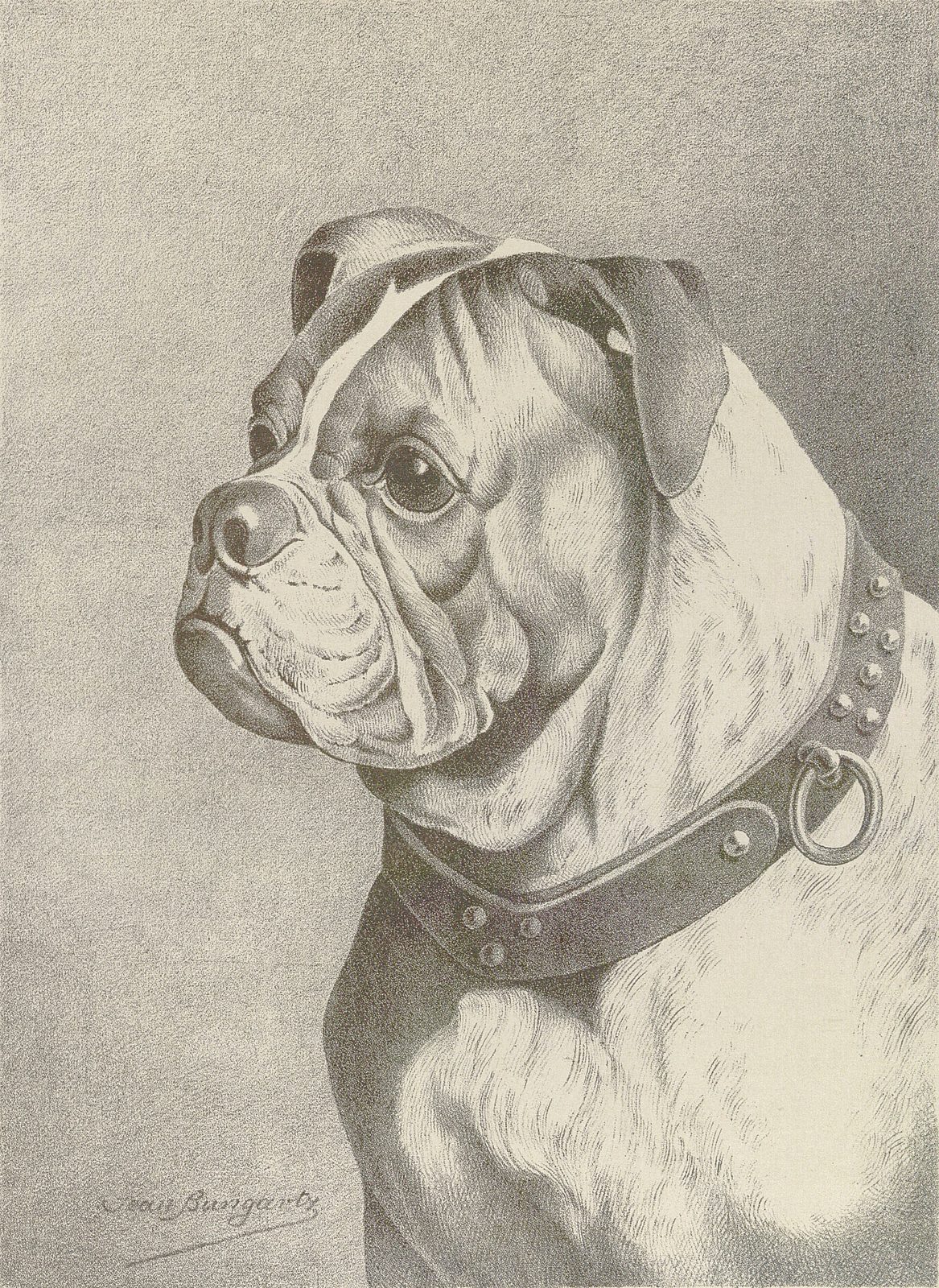
Nineteenth-century lithograph of an English Bulldog head in profile, wearing a studded leather collar. Jean Bungartz, Illustrirtes Muster-Hundebuch, Hamburg, 1890. Public domain.

The Bulldog is one of the oldest named breeds in England. Its ancestors were working dogs of the butcher and the bull ring, bred for a low center of gravity, a wide jaw, and a nose set back so the dog could breathe while it held on. When Parliament outlawed bull-baiting in 1835, the breed lost its job and nearly disappeared. A handful of fanciers refused to let it go. Over the next forty years they bred the aggression out and the character in, keeping the head and the front but selecting for a calm, affectionate dog that could live in a house. The Bulldog Club was founded in England in 1875 and is still the oldest breed club in the world. The American Kennel Club recognized the breed in 1886. The dog in this 1890 plate was drawn from show winners of the day. Look at the head, the rope over the nose, the depth of the chest: the modern Bulldog was already there. What has changed since is mostly a question of how far breeders were willing to exaggerate it. That is the question every serious buyer should be asking a breeder today.
Is an English Bulldog Right for You

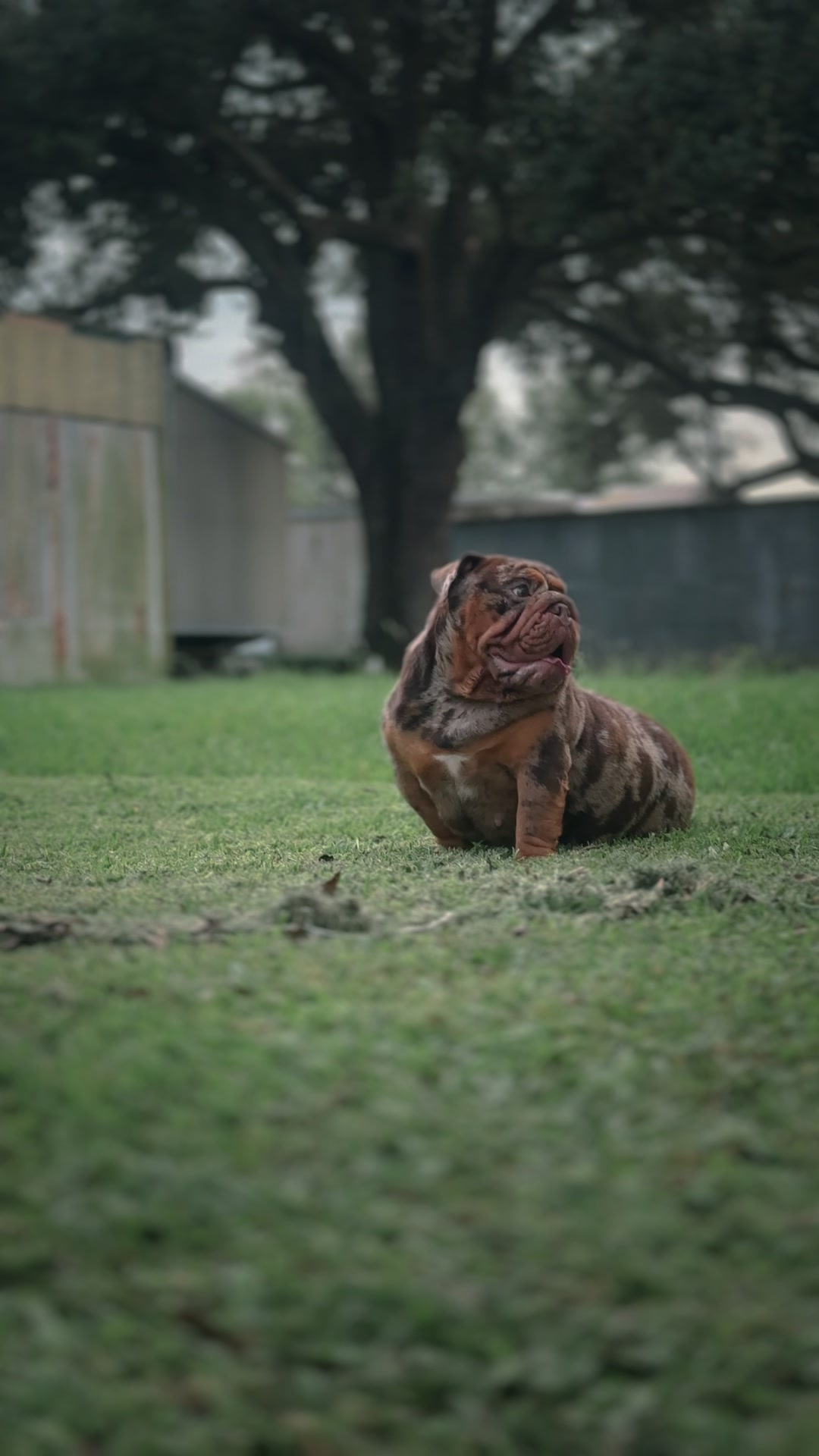
Vogue, chocolate tri merle English Bulldog, at home with the Godspeed family

A Bulldog is a house dog. It wants to be in the room you are in, on the couch if allowed, and it will follow you from one end of the home to the other and then sleep for three hours. It is affectionate, stubborn, funny, and slow to change its mind. It is also a breed with real costs. Bulldogs snore, drool, pass gas, and shed more than people expect. They need their wrinkles cleaned. They cannot swim. They cannot be left in a hot yard. Veterinary bills run higher than for most breeds, and a good pet insurance policy is worth having from day one. If you want a jogging partner, a dog for the boat, or a dog that lives outside, this is the wrong breed and we will say so. If you want a companion that treats your family as its whole world, keep reading.

Louisiana Heat Is the First Rule

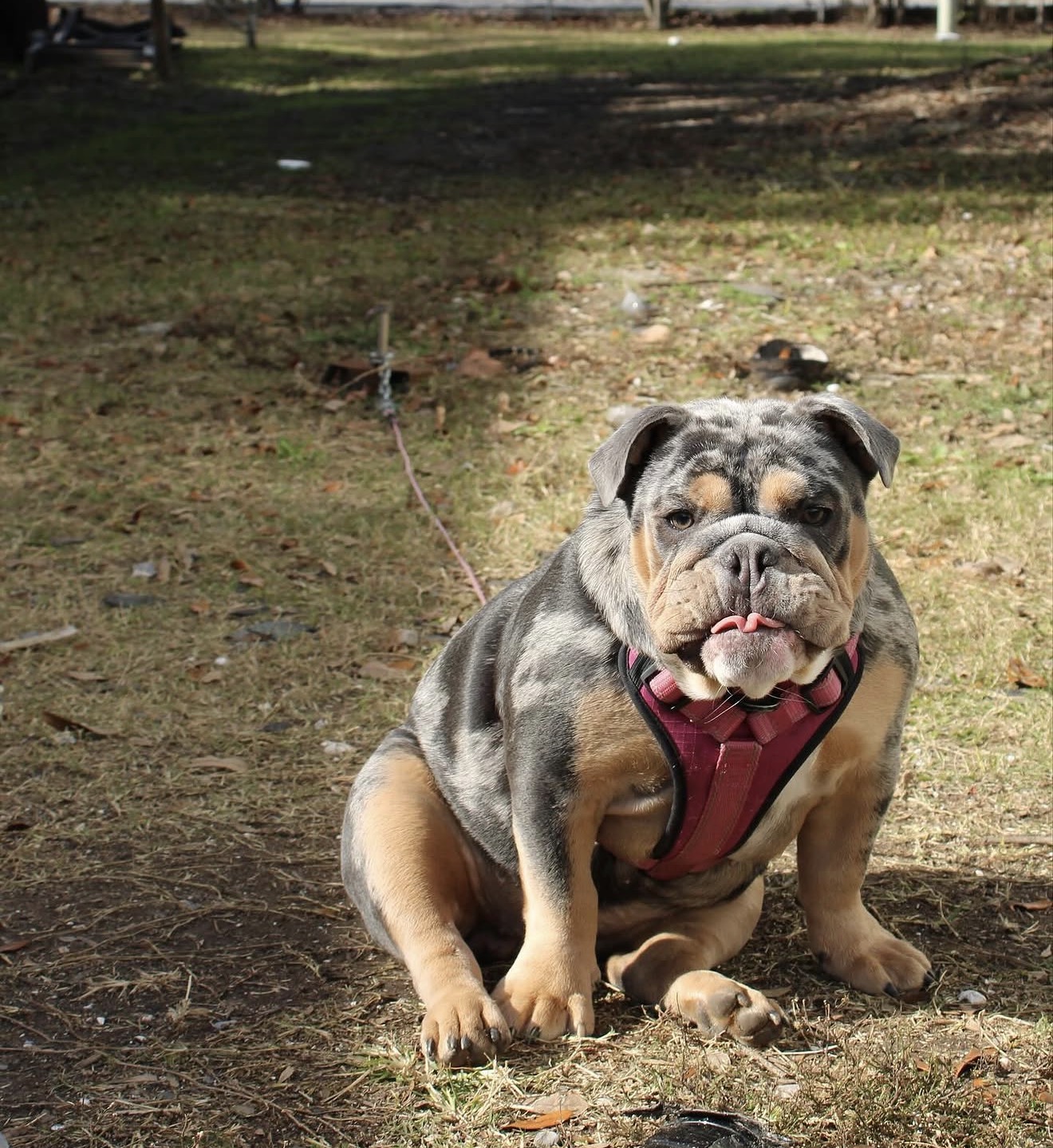
PHAT MA, blue tri merle English Bulldog, sitting in the shade of the yard in Houma

English Bulldogs are brachycephalic. The short muzzle that gives them their face also gives them a shorter airway, and that is the single most important thing to understand about caring for one. They cool themselves by panting, and they are poor at it. In Houma, that means air conditioning is not optional. Walks happen early morning or after dark from May through September. No midday exertion, no long car rides without AC, no waiting in a parked vehicle, ever. Keep water down at all times and watch for heavy panting, a wide tongue, or a dog that lies down and will not get up. Those are signs to cool the dog immediately and call your veterinarian. We ask every family about their cooling situation before we place a puppy. A home that cannot keep a Bulldog cool is not a home we will place into, and we do not apologize for that.

What Merle Actually Is

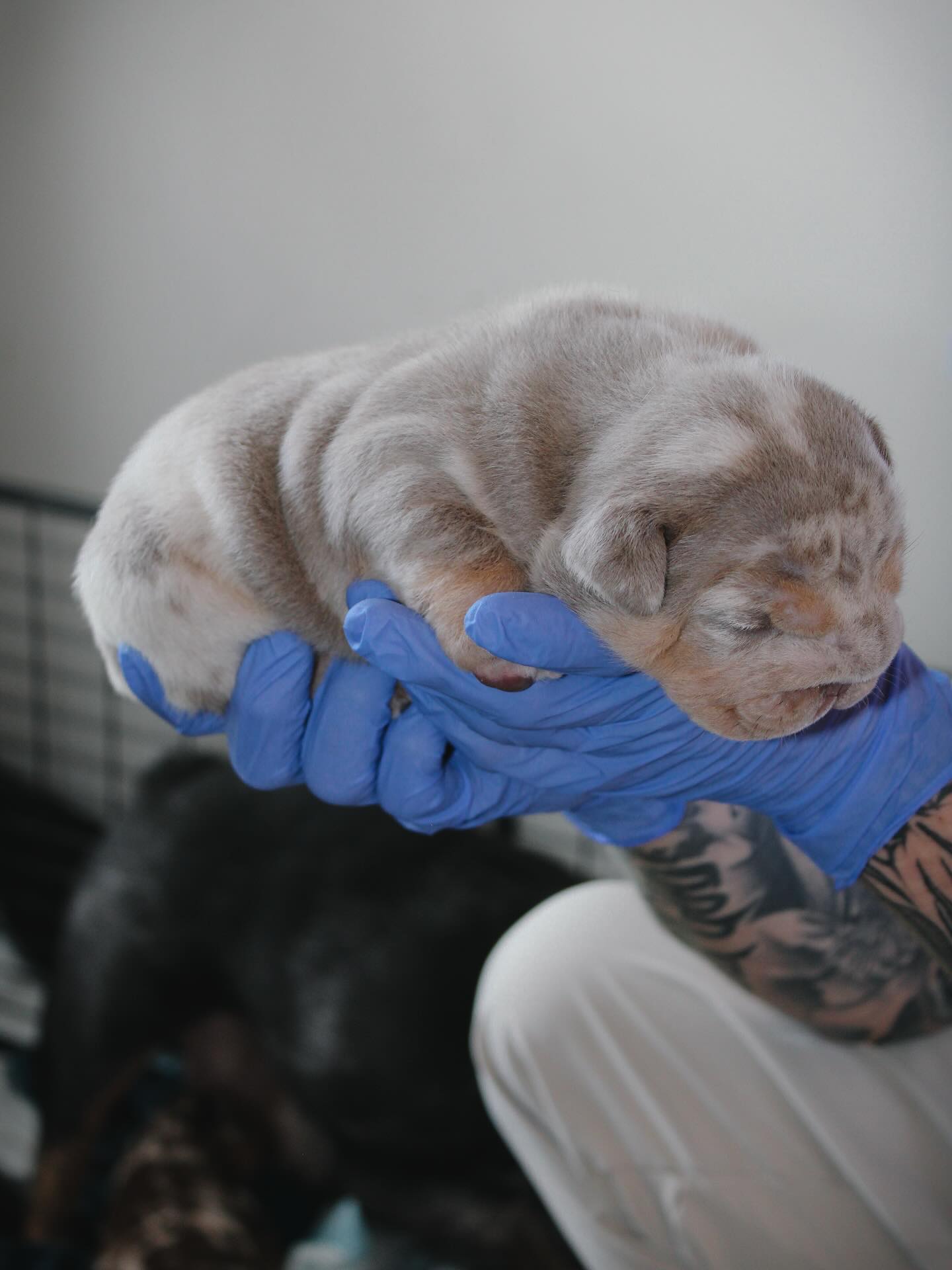
A newborn lilac merle English Bulldog puppy held in gloved hands in the whelping box

Merle is a coat pattern, not a color. The merle gene dilutes patches of the base coat into a marbled, mottled look, so a blue tri merle and a chocolate tri merle are the same pattern over different base colors. Some of our dogs carry it. PHAT MA is a blue tri merle. Two facts matter for buyers. First, the AKC Bulldog standard disqualifies merle from the show ring, and a merle Bulldog can still be fully AKC registered. Registration records parentage; the standard governs conformation shows. Both things are true at once. Second, merle should never be bred to merle. Puppies that inherit two copies of the gene face serious risks to hearing and vision. We do not pair merle to merle, and we will not sell breeding rights to anyone who plans to. A coat does not tell you whether a dog is healthy. Structure, breathing, movement, and temperament do. Color is part of a dog’s description here, never the reason for a pairing.

C-Sections, Whelping, and Why We Wait

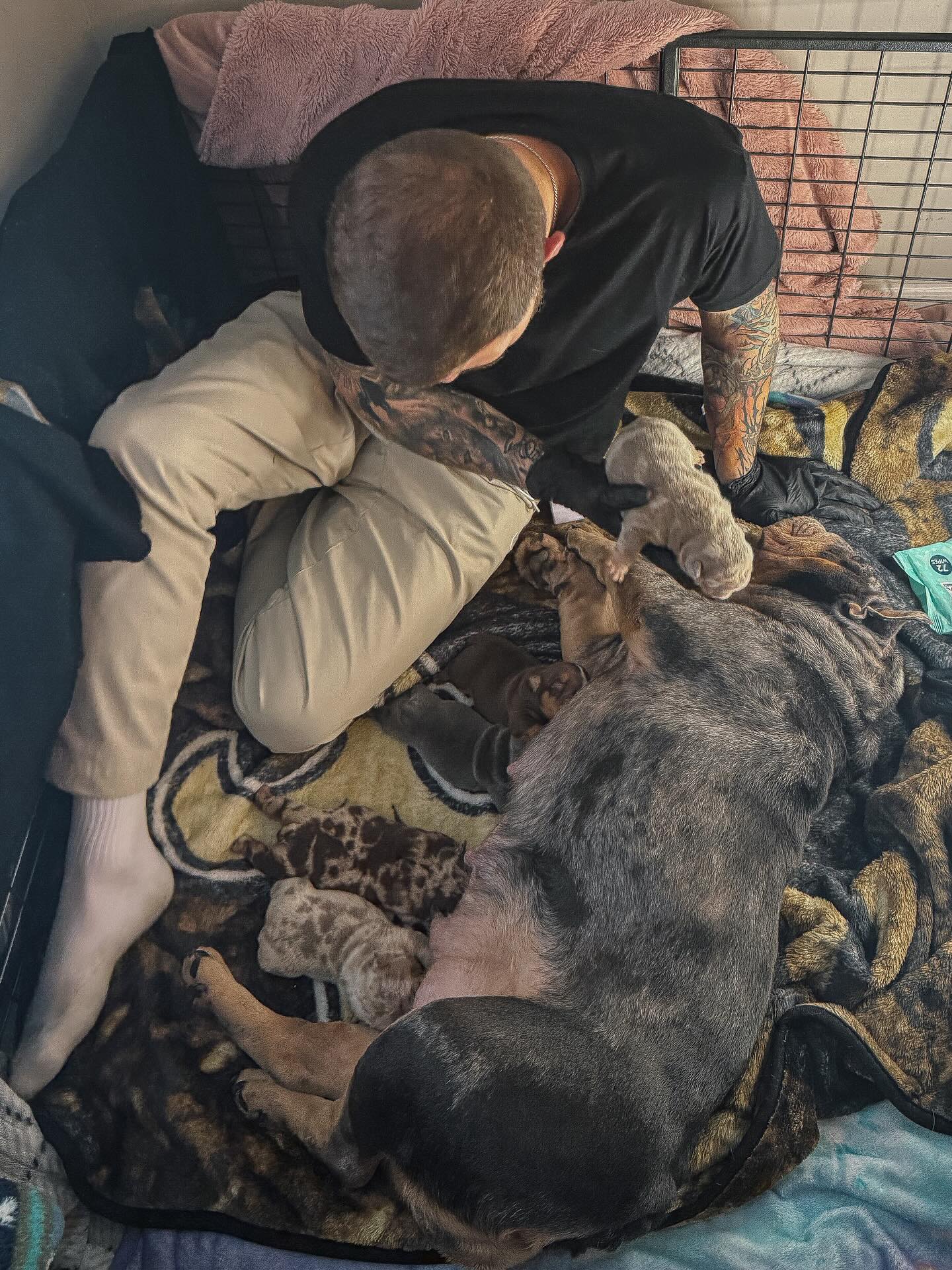
Logan kneeling in the whelping box beside PHAT MA and her newborn litter

Most English Bulldog litters are delivered by planned cesarean. The breed’s wide head and narrow hips make natural whelping risky for the mother and the puppies, so timing is set with our veterinarian using progesterone testing, and the surgery is scheduled, not rushed. That is the breed. It is also part of why a well-bred Bulldog puppy costs what it does. The mother comes first in every decision. We breed a female only when she is physically mature, in good condition, and the right pairing is there. If she needs another cycle, she gets it. Newborn Bulldogs need round-the-clock attention for the first two weeks, and we are with them for it: supplemental feeding when needed, warmth, weight checks, and a quiet house. Puppies stay with us until eight weeks and go home only when the individual puppy is ready.

How We Breed

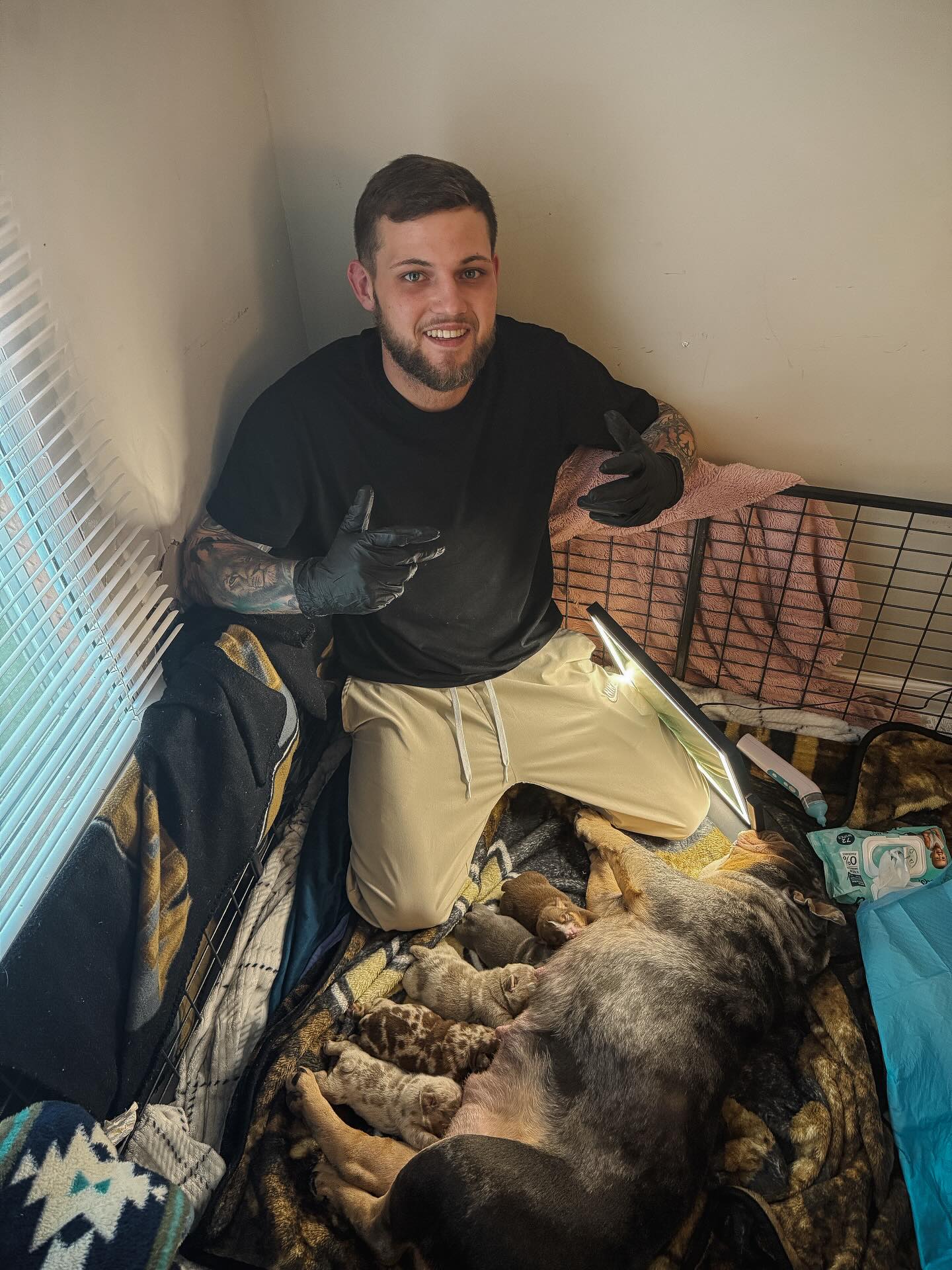
Logan Folse in the whelping room with PHAT MA and her nursing litter

Godspeed is a small family-run kennel in Houma. We keep a few dogs, plan a litter at a time, and know every puppy by name and personality before it leaves. We are not trying to be the biggest kennel in Louisiana. We are trying to be one you can still call in five years. What we stand behind: health and structure decide a pairing, never the coat. The mother is never bred back to back. Merle is never paired with merle. Every puppy goes home with AKC paperwork, veterinary records, and a written agreement. And if you can ever no longer keep your dog, you call us first. A Godspeed Bulldog does not go to a shelter. What a deposit does not buy: a specific color, sex, size, or go-home date. We will tell you what a litter looks like once it is on the ground, and we will tell you honestly if it did not produce what you hoped for.

Your First Week, Prepared

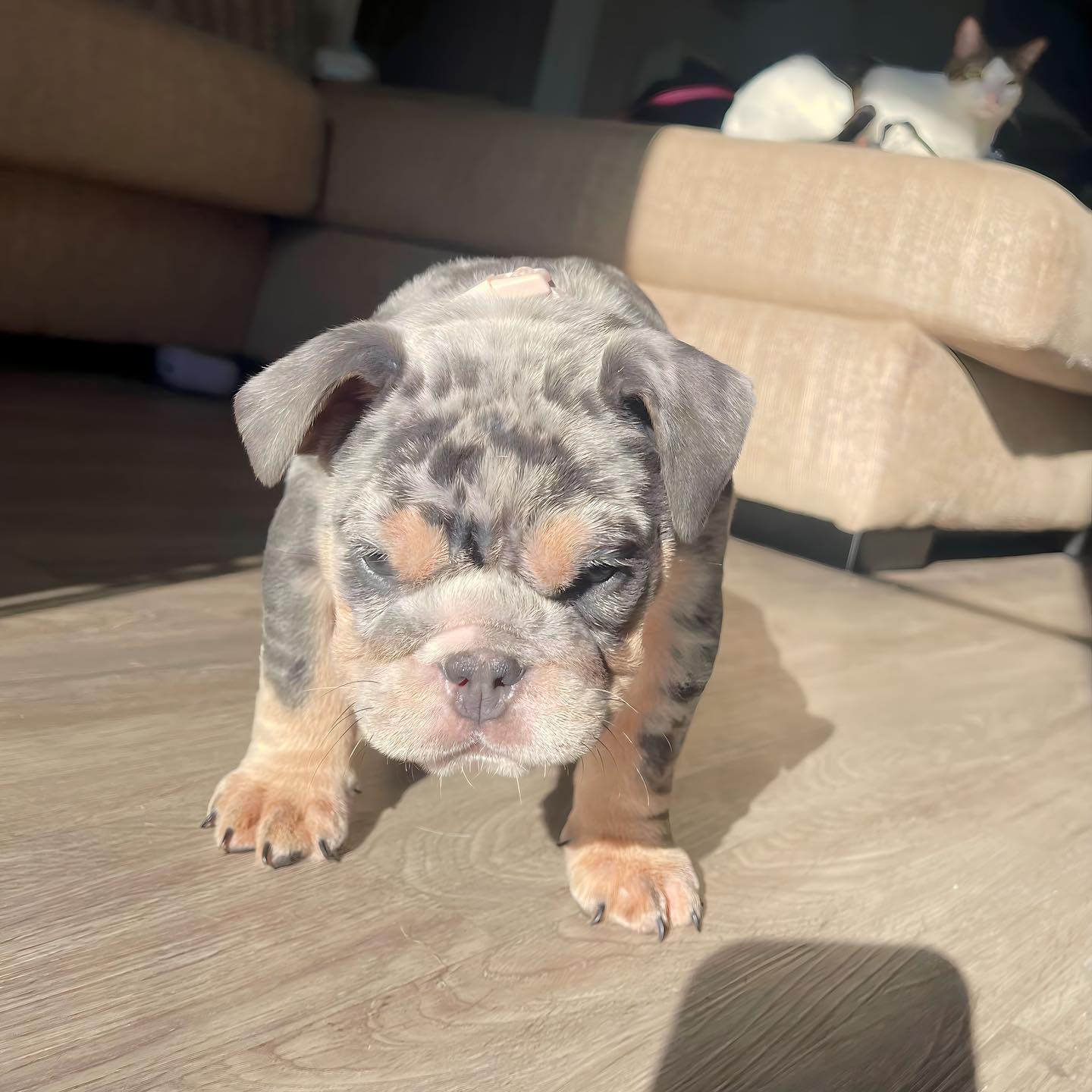
A blue tri merle English Bulldog puppy standing on a wood floor at home

Have the house ready before pickup so the first days are about settling in, not shopping. Your puppy comes home with a care package and the food it has been eating. Keep that food for at least two weeks before changing anything.

  • A crate sized for an adult Bulldog with a divider, placed where the family spends time
  • Shallow stainless or ceramic bowls, with fresh water down at all times
  • The same food we send home, plus a bag of the same brand
  • Unscented wipes for wrinkles, tail pocket, and paws, used daily
  • A harness rather than a collar for walks. Bulldog necks and airways do not need pressure
  • Enzyme cleaner, puppy pads for the first nights, and a plan for potty trips every two hours
  • A visit with your own veterinarian booked for the first few days home, records in hand
  • Pet insurance started the week you bring the puppy home

Talk With Us About the Home You Have in Mind

Call or text with your questions, or get the litter updates by email. It is free and does not hold a puppy.